- Home
- ServicesCrafted for Growth
Our development solutions are designed to transform your vision into a thriving success story.
- TechnologiesTech Solutions
We leverage cutting-edge technology to drive efficiency, scalability, and excellence in every project we undertake.
- Contact Us
IoT for Business: Real Use Cases That Are Actually Working in 2027
Posted By
naxtre
Published Date
23-10-2026
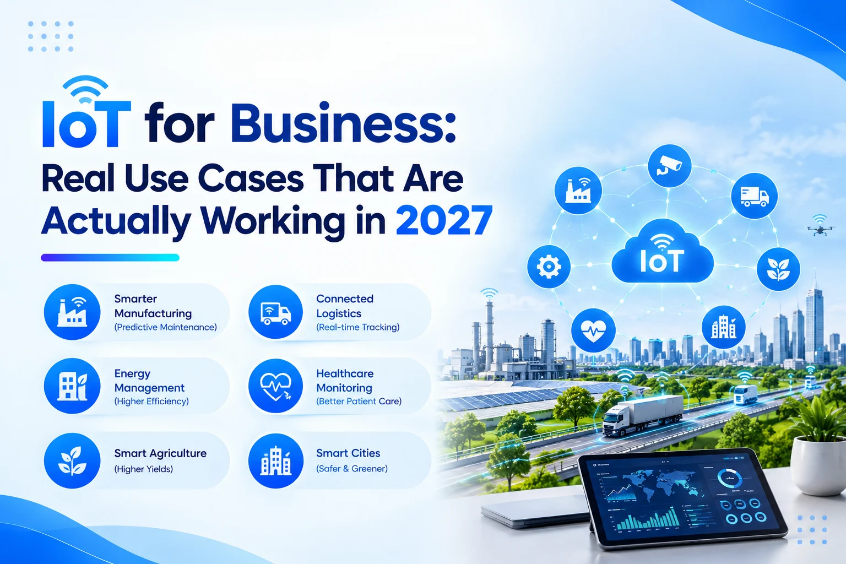
IoT for business means connecting physical assets, sensors, and systems so they share real-time data to automate decisions and reduce operational costs. In 2027, this technology is no longer a pilot project. Manufacturers, logistics companies, retailers, and healthcare providers are deploying IoT at scale and seeing measurable returns within months. The barrier is no longer cost or technology. The barrier is knowing where to start.
Key Takeaways
The global IoT market is forecast to reach $1.1 trillion by 2028, according to IoT Analytics. Predictive maintenance reduces unplanned downtime by 30 to 50 percent in manufacturing environments. Cold chain monitoring cuts food and pharma spoilage losses by up to 25 percent. Smart energy management delivers 15 to 20 percent reductions in commercial building energy bills. Businesses that start with one focused use case and build outward see better ROI than those that try to connect everything at once. The technology is mature. The playbook is proven. The question now is which problem to solve first.
Why IoT for Business Has Finally Hit Its Stride
For most of the last decade, IoT discussions were split between two extremes. On one side were overpromised visions of trillion-connected-device cities. On the other were IT teams who had seen enough vendor hype to treat IoT as another buzzword cycle. In 2027, both of those conversations are largely over.
What has replaced them is quieter and far more practical. Businesses across sectors are deploying IoT not because it sounds innovative but because it solves specific, expensive problems they have been living with for years. The hardware is affordable. Connectivity options are mature. Cloud platforms have simplified the data pipeline. And the implementation playbook is well established enough that mid-size businesses can follow it without inventing anything new.
This article covers the use cases that are generating verifiable results right now, across manufacturing, logistics, retail, healthcare, and facilities management. Every pattern described here has been implemented, measured, and refined in real organisations.
Manufacturing: Predictive Maintenance Is Paying for Itself
The problem it replaces
Unplanned equipment downtime is one of the most expensive operational events in manufacturing. A single production line stoppage can cost anywhere from $10,000 to $250,000 per hour depending on the industry. Traditional maintenance is either reactive, meaning you fix it when it breaks, or calendar-based, meaning you service it every 90 days regardless of condition. Both approaches waste money in different ways.
How IoT changes the outcome
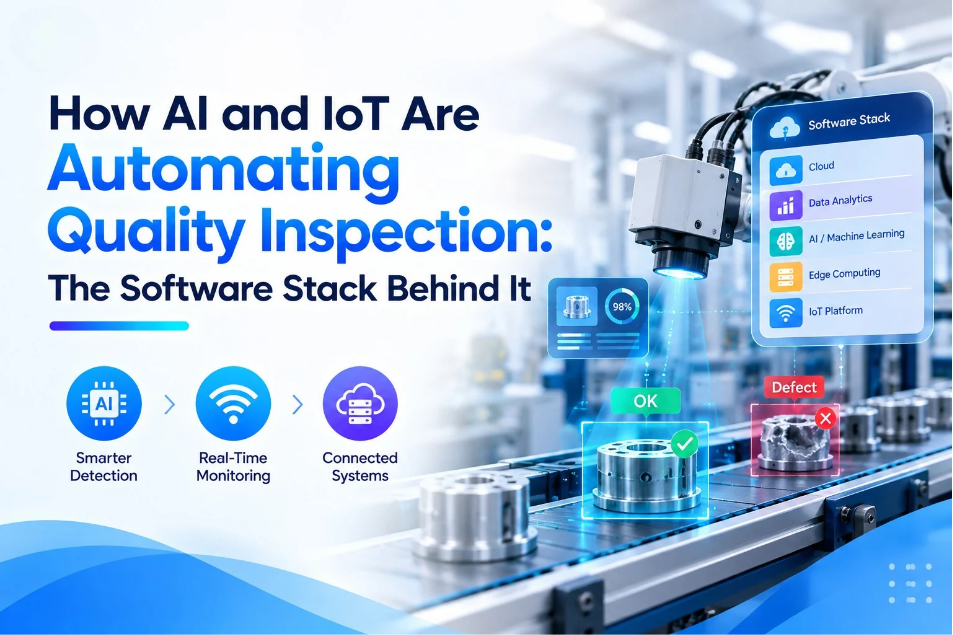
Vibration sensors, thermal cameras, acoustic monitors, and current draw meters attach to critical equipment and feed data continuously to a processing layer. That layer applies threshold rules or machine learning models to detect early signs of failure. When a bearing starts vibrating outside its normal range, or a motor draws more current than expected under a given load, the system alerts the maintenance team before the failure occurs. The team dispatches a technician with the right part instead of scrambling after a production halt.
The McKinsey Global Institute estimates that predictive maintenance reduces maintenance costs by 10 to 25 percent and extends equipment life by 20 to 40 percent. For businesses exploring how connected technology fits into a broader digital product strategy, our guide on custom software development services explains how sensor data integrates with existing ERP and operations systems.
What a real deployment looks like
Most successful deployments start with two or three critical machines rather than the entire floor. Sensors are installed, a data pipeline is configured, and alert thresholds are tuned over four to eight weeks of baseline data collection. The team validates early alerts against actual equipment condition. Once confidence builds, scope expands. A full facility rollout typically takes six to eighteen months depending on size and legacy infrastructure.
Maintenance Approach | Cost Profile | Downtime Risk | Best For |
Reactive (break-fix) | Low upfront, high emergency cost | High | Non-critical equipment |
Preventive (scheduled) | Predictable but often wasteful | Medium | Equipment with fixed wear cycles |
Predictive (IoT-driven) | Higher setup, lowest long-term cost | Low | Critical, high-value machinery |
Cold Chain and Logistics: When the Data Saves the Product
The scale of the loss
Pharmaceutical cold chain failures cost the industry an estimated $35 billion annually. Food spoilage due to temperature excursions during transit represents another enormous category of losses for distributors and retailers. In both cases, the problem is identical: products move through multiple handoffs across warehouses, trucks, and distribution centres, and no one has real-time visibility into what conditions those products experienced along the way.
What IoT enables
Temperature and humidity sensors embedded in shipment containers, pallets, or individual packaging transmit readings at configurable intervals throughout the journey. If a refrigerated truck door stays open too long at a loading bay, or if a warehouse zone drops below the required temperature floor, the alert fires immediately rather than being discovered at delivery. The data creates a complete chain-of-custody log that regulatory bodies across the US, EU, and India increasingly require for pharmaceutical and food safety compliance.
The FDA Food Safety Modernization Act traceability requirements, now fully in effect, are accelerating IoT adoption for food distributors who need documented temperature logs throughout the supply chain. For businesses already managing logistics complexity, this is a compliance driver as much as an operational one.
Mid-market accessibility
Cellular-connected temperature loggers that transmit to cloud dashboards are available from established vendors for well under $100 per unit. A mid-size distributor can instrument an entire fleet of 20 trucks and three warehouses for under $50,000 in hardware and first-year platform costs, with a payback period under 18 months if it prevents even a few spoilage claims per year.
Retail: Inventory Intelligence Without the Manual Count
The inventory accuracy gap
Retail inventory accuracy has been a persistent and expensive problem long before IoT existed. Research from the ECR Community consistently shows that retail inventory records are accurate only 65 percent of the time. One in three items the system believes is on the shelf either does not exist there, is in the wrong location, or is a phantom record from a processing error. Stockouts and overstock together cost global retail an estimated $1.75 trillion annually.
RFID and shelf sensors in practice
RFID tags on merchandise combined with smart shelf sensors and handheld readers give retailers continuous inventory visibility without manual counts. When an item leaves the shelf and crosses an RFID reader zone, its status updates automatically. Replenishment triggers fire when shelf weight or tag count drops below threshold. Staff time previously spent on manual inventory cycles redirects to customer-facing work. The combination of fewer stockouts and lower labour costs is the core return on investment for most retail deployments.
Customer flow analytics
A related application uses passive infrared sensors and camera-based people counters at entrances, aisles, and checkout areas to map customer movement. This data informs store layout decisions, staffing schedules, and promotional placement in ways that weekly sales reports cannot. A retailer who discovers through sensor data that 70 percent of customers never reach the back third of the store has clear, actionable information to change that.
Healthcare and Facilities: Asset Tracking and Environment Monitoring
Hospital asset tracking
Hospitals lose enormous staff time each year searching for mobile equipment. IV pumps, wheelchairs, portable monitors, and infusion carts routinely disappear between departments, pile up in ward corners, or get stored in incorrect locations. Studies have estimated that nurses spend an average of 21 minutes per shift searching for equipment. Across a large hospital, that represents thousands of hours of nursing time each year diverted from patient care.
Real-time location systems using Bluetooth Low Energy beacons or Ultra-Wideband tags on each asset solve this directly. A staff member can locate any tagged asset on a floor map from any workstation or mobile device in seconds. Equipment utilisation rates improve, procurement teams buy fewer duplicate assets, and maintenance teams schedule servicing based on actual usage hours rather than calendar dates.
Smart building energy management
Commercial facilities are deploying IoT sensors to monitor air quality, CO2 concentration, temperature, humidity, and occupancy simultaneously. This data feeds into building management systems that adjust HVAC output dynamically rather than running on fixed schedules. The American Council for an Energy-Efficient Economy has documented cases where smart building controls combined with IoT sensor input reduced HVAC energy consumption by 15 to 30 percent.
If your organisation is evaluating IoT as part of a broader technology investment, our overview of IoT application development services covers the integration architecture that connects sensor data to your existing systems.
Where IoT Projects Fail and Why
For every successful IoT deployment, others stall, deliver thin results, or get abandoned. Understanding the failure patterns is as useful as understanding the successes.
Starting too broad
Organisations that launch IoT initiatives with the goal of connecting everything at once consistently underdeliver. The infrastructure complexity, data integration work, and organisational change required to instrument an entire operation simultaneously is enormous. Businesses that see results start with one high-value, high-pain use case, prove it, and expand from there. That single constraint accounts for more IoT project failures than any technical problem.
Ignoring data quality
Sensors are only as useful as the data they produce. Poorly calibrated sensors, inconsistent sampling rates, connectivity gaps in the field, and missing data handling all degrade the information reaching decision-makers. An alert system that fires false positives twice a week gets ignored. Investing in data pipeline quality and sensor calibration processes early is not optional.
No clear ownership
IoT deployments sit at the intersection of IT, operations, and often procurement and compliance. Organisations that do not assign a clear internal owner for the system, its data, and its outcomes end up with a sensor network nobody maintains and dashboards nobody checks. Someone needs to own the results.
How to Decide If IoT Makes Sense for Your Business Right Now
The right starting point is a problem you are already paying to live with. If you have measurable downtime on a critical asset, documented product losses in transit, staff time disappearing into manual counts, or energy bills out of proportion to your facility size, you have a candidate use case for IoT for business.
The next question is whether the data you need can be collected. Most physical phenomena that cause business problems, such as temperature, vibration, location, weight, flow rate, and current draw, can be sensed with commercially available hardware at reasonable cost. The technical barrier in 2027 is lower than it has ever been.
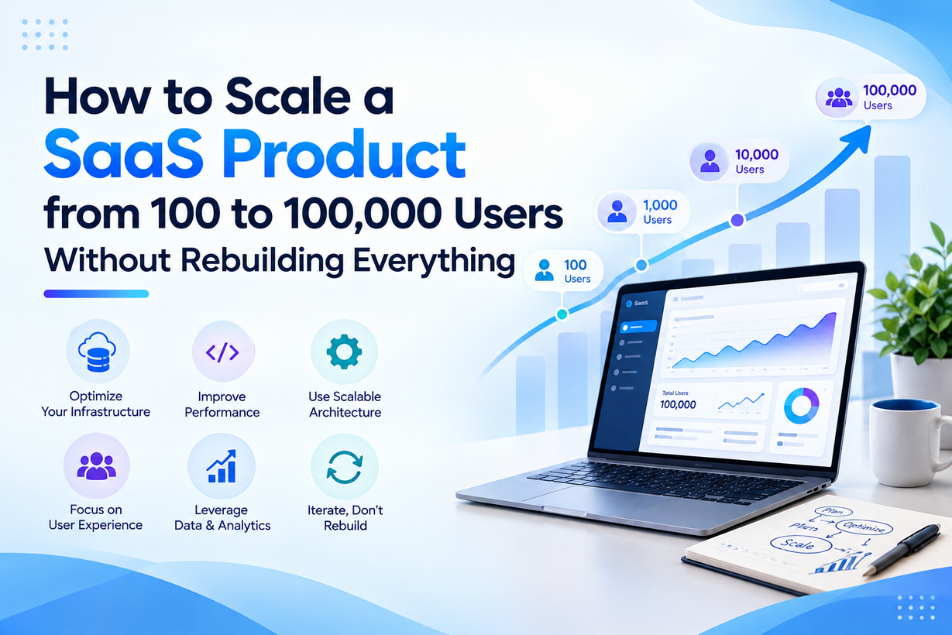
The real challenge is integration: connecting sensor data to the systems your team already uses. This integration layer is where most of the custom development effort lives. For companies that have previously gone through a SaaS scaling project, our article on how to scale a SaaS product from 100 to 100,000 users covers the architecture decisions that matter most when adding new data streams to an existing platform.
Frequently Asked Questions About IoT for Business
What is IoT for business and how does it differ from consumer IoT?
Business IoT, often called Industrial IoT or IIoT in industrial settings, focuses on connecting equipment, assets, and environments to collect operational data that drives efficiency and reduces cost. Consumer IoT covers personal devices like smart speakers and home automation. Business IoT is built for higher reliability, stronger security requirements, and integration with enterprise systems such as ERPs and warehouse management platforms.
How much does it cost to implement an IoT solution for a mid-size business?
A targeted deployment such as asset tracking for 50 pieces of equipment or temperature monitoring for a fleet of 15 vehicles can range from $15,000 to $75,000 in total first-year cost, including hardware, connectivity, platform licensing, and integration work. The key is starting with a scoped use case where the ROI calculation is clear before committing to a larger rollout.
How long does it take to see ROI from an IoT deployment?
For well-scoped deployments targeting a specific operational pain point, payback periods of 12 to 24 months are common in manufacturing maintenance and cold chain applications. Energy management systems typically pay back in 18 to 36 months. Use cases with lower deployment costs and high-value problem resolution can deliver ROI in months rather than years.
Is IoT secure enough for business use in 2027?
Enterprise IoT platforms have matured significantly on security. End-to-end encryption, device authentication, over-the-air update capabilities, and network segmentation are now standard in credible platforms. The risks are manageable with proper architecture, but they require deliberate attention. IoT devices should never share networks with core business systems without proper segmentation.
What connectivity options are available for IoT devices?
The main options are cellular for mobile assets, Wi-Fi for indoor fixed deployments, LoRaWAN for long-range low-power monitoring, Bluetooth Low Energy for short-range asset tracking inside facilities, and wired Ethernet for high-reliability fixed industrial equipment. The right choice depends on coverage area, power availability, data volume, and latency requirements.
Can small businesses benefit from IoT or is it only for large enterprises?
The cost of IoT hardware and cloud platforms has fallen to the point where focused deployments are accessible to businesses with 10 to 100 employees. A small food distributor can monitor vehicle temperatures with a $2,000 to $5,000 investment in hardware plus a modest monthly platform fee. A small manufacturer can instrument two or three critical machines for under $10,000.
What industries are seeing the fastest IoT adoption in 2027?
Manufacturing, logistics and supply chain, healthcare facilities management, commercial real estate, and agriculture are seeing the fastest adoption rates globally. In India specifically, manufacturing, pharmaceutical cold chain, and smart building management are growing fastest, driven by compliance requirements, energy cost pressures, and increasing availability of local system integrators.
What is the difference between IoT and edge computing?
IoT refers to the network of connected devices and sensors that collect and transmit data. Edge computing refers to processing that data locally on or near the device rather than sending it all to a central cloud. Many IoT deployments combine both: sensors collect data, an edge gateway processes it locally for real-time decisions, and summary data goes to the cloud for broader analysis.
The Window for Competitive Advantage Is Still Open
IoT for business has crossed the line from emerging technology to proven operational tool. The use cases in this article are not predictions. They are patterns that have been implemented, measured, and refined across industries and geographies over several years.
What remains true is that adoption is still uneven. In most industries, the majority of mid-size businesses have not yet deployed a single IoT system at scale. That means companies that move now are not late to a trend. They are early enough to build operational advantages that slower-moving competitors will struggle to close.
The technology is affordable. The implementation playbook is well established. The ROI in the right use case is defensible. The question for most businesses in 2027 is no longer whether IoT for business makes sense. It is where to start and how quickly to scale from that first deployment.
Let's Talk
About Your Idea!