- Home
- ServicesCrafted for Growth
Our development solutions are designed to transform your vision into a thriving success story.
- TechnologiesTech Solutions
We leverage cutting-edge technology to drive efficiency, scalability, and excellence in every project we undertake.
- Contact Us
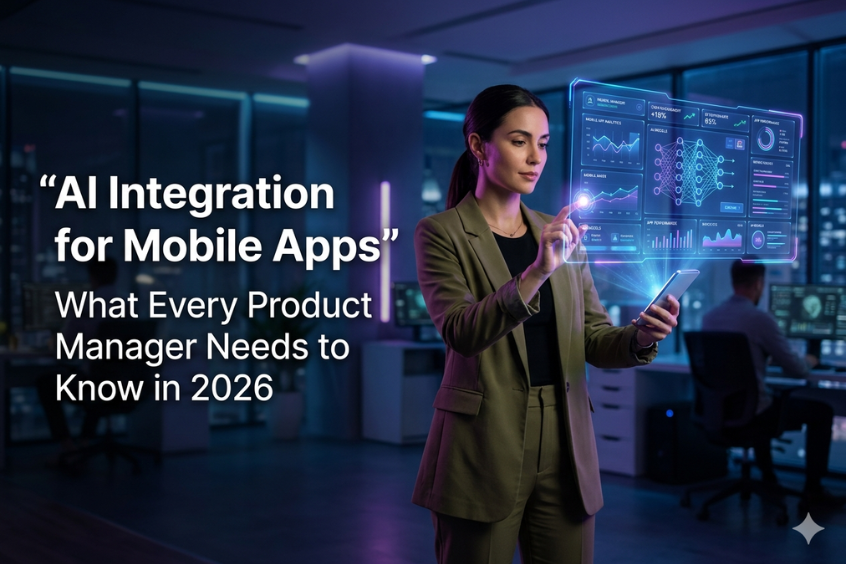
AI Integration for Mobile Apps: What Every Product Manager Needs to Know in 2026
Posted By
naxtre
Published Date
10-04-2026
The mobile landscape has fundamentally shifted. AI is no longer an optional enhancement — it is the core engine powering the world's most competitive mobile products. For product managers, founders, and CTOs navigating this new reality, understanding how to execute AI integration for mobile apps is now a non-negotiable leadership competency.
Whether you're building a fintech platform, a healthcare application, a retail experience, or an enterprise SaaS tool, the strategic deployment of AI can mean the difference between a product that scales and one that stagnates. This guide gives you a comprehensive, practical roadmap — from the AI features driving the most value today, to the implementation frameworks that actually work, to the trends reshaping AI mobile app development heading into 2027.
AI in Mobile Apps: Key Market Insights
$272B – Projected global AI mobile market by 2027
78% – Enterprise apps expected to embed AI features by 2026
3.4× – Higher retention with AI-personalized experiences
62% – Reduction in support costs using AI assistants
These numbers highlight one reality: AI is becoming a competitive requirement, not a luxury feature.
Why AI Integration Is a Strategic Imperative — Not a Feature
For years, AI in mobile apps was positioned as a novelty — a chatbot here, a recommendation engine there. In 2026, that framing is obsolete. AI-powered mobile applications now define entire product categories. Users expect apps to know them, adapt to them, and anticipate their needs in real time.
For product leaders, this creates both an opportunity and a risk. The opportunity: AI enables experiences that were impossible just three years ago — hyper-personalized onboarding flows, real-time fraud prevention, context-aware UI adaptation, and voice-first navigation. The risk: teams that treat AI as a bolt-on feature rather than a foundational architectural decision will ship products that feel hollow and lose ground to faster-moving competitors.
💡 Product Leader Insight: The most successful AI-integrated mobile products in 2026 share one trait — they designed with AI at the center of the user journey, not appended to it. Start with the user problem, then ask which AI capability solves it most elegantly.
Key AI Features Powering Today's Top Mobile Apps
Before diving into implementation, product managers need fluency in the core AI capabilities available in the modern mobile stack. Here's what's actually moving the needle in AI mobile app
On-Device Machine Learning
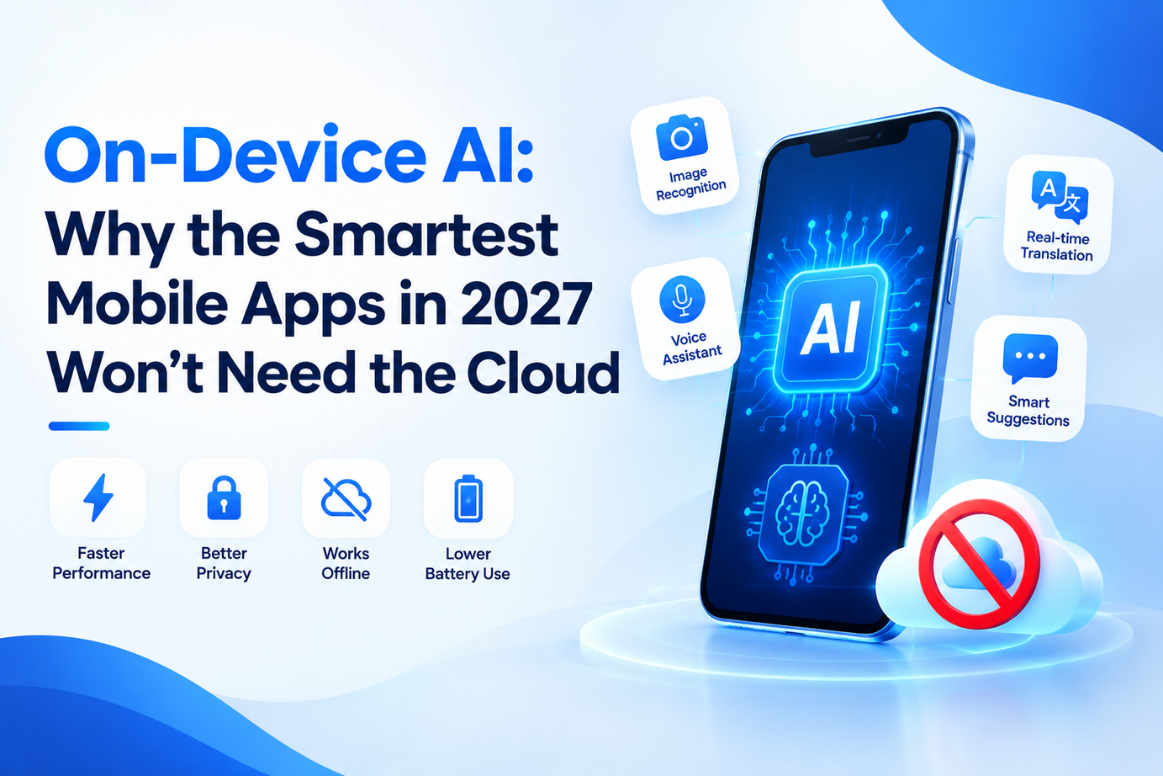
Models like Core ML (iOS) and ML Kit (Android) run inference directly on device — no network call needed. Critical for privacy-first use cases and low-latency experiences.
Conversational AI & LLM Integration
Large language models embedded in mobile apps now power customer support, in-app search, content generation, and guided workflows — far beyond basic chatbots.
Computer Vision
Real-time object detection, document scanning, AR try-on, and visual search have become table stakes in retail, logistics, and healthcare apps.
Personalization Engines
AI-driven recommendation systems analyze behavioral signals to serve dynamic content, adaptive UI layouts, and predictive feature surfacing at the individual user level.
Behavioral Biometrics & Fraud Detection
AI models analyze typing cadence, navigation patterns, and device signals to authenticate users and flag anomalies — silently, without friction.
Voice & Natural Language Processing
NLP powers voice search, sentiment analysis in reviews, multilingual support, and accessibility features that expand user reach across demographics.
Predictive Analytics
Churn prediction, demand forecasting, and next-action recommendation keep mobile products proactive — surfacing value before users know they need it.
Intelligent Automation & Agentic Workflows
Agentic AI handles multi-step tasks autonomously — scheduling, form completion, order tracking — reducing cognitive load and session friction significantly.
Business Benefits of AI Integration for Mobile Apps
The business case for AI integration for mobile apps is no longer theoretical. Here's how AI-powered mobile products are delivering measurable ROI across industries.
User Retention
Personalized AI experiences reduce churn by identifying disengagement signals early and triggering re-engagement flows automatically — before users drift away.
Revenue Growth
AI recommendation engines consistently outperform manual merchandising strategies, increasing average order value and cross-sell conversion rates in e-commerce and subscription apps.
Operational Efficiency
AI-powered in-app assistants deflect 40–70% of support tickets, dramatically reducing contact center costs while improving response times to near-zero.
Faster Time-to-Market
AI code generation, automated QA, and synthetic data testing compress development cycles — enabling product teams to ship AI-powered features weeks faster.
Competitive Differentiation
In commoditized app categories, AI-driven UX is the primary differentiator. Brands that personalize at scale win loyalty that price cuts cannot replicate.
Accessibility & Reach
AI-driven accessibility features — voice navigation, real-time translation, adaptive UI — expand your addressable market to underserved user segments.
Implementation Roadmap: A Product Manager's Step-by-Step Guide
Successfully shipping AI-powered mobile applications requires a deliberate process. Here's the framework Naxtre's product consultants use with enterprise clients to move from AI strategy to production deployment.
Define the Problem Before the Technology
Map the user journey and identify where friction, drop-off, or unmet expectations exist. The best AI integrations solve a specific, measurable problem — not a vague "enhance with AI" directive.
Audit Your Data Readiness
AI models are only as good as the data that trains them. Evaluate your data collection infrastructure, quality, and compliance posture (GDPR, DPDP Act 2023) before committing to an AI feature.
Choose the Right AI Deployment Model
Decide between on-device inference (privacy, speed), cloud API (power, flexibility), or hybrid (best of both). This choice affects architecture, latency, cost, and data governance from day one.
Build an AI-Ready Engineering Foundation
Establish data pipelines, model versioning, A/B testing infrastructure, and monitoring from the start. Retrofitting these after launch is expensive and disruptive.
Start with a High-Impact, Low-Risk Pilot
Identify one AI feature where you have sufficient data, clear success metrics, and limited downside risk. Ship it, measure it, and build institutional knowledge before scaling.
Implement Continuous Model Monitoring
AI models degrade over time as user behavior evolves. Build alerting, retraining triggers, and human review processes into your roadmap as first-class product concerns.
Build for Responsible AI from Day One
Transparency, fairness, and user control are not nice-to-haves in 2026 — they are regulatory requirements and brand imperatives. Embed explainability and bias audits into your development process.
Working Effectively with Your AI Development Partner
For most product teams, partnering with a specialized AI mobile app development firm accelerates execution dramatically. Clearly define ownership of model quality, data governance, and monitoring SLAs in your contract. Expect your development partner to bring both ML expertise and mobile platform depth — they are different skill sets that must coexist.
2026 AI Trends Reshaping Mobile App Development
The pace of change in AI is relentless. Here are the five trends that every product leader building AI-powered mobile applications must understand heading into the next 18 months.
Trend 01 - Multimodal AI Interfaces
Apps now process voice, text, image, and video simultaneously. Multimodal inputs are becoming the default interaction paradigm, especially in healthcare, education, and enterprise tools.
Trend 02 - Agentic AI Workflows
AI agents that take multi-step autonomous actions inside your app — booking, researching, transacting — are moving from experimental to mainstream, reducing user effort to near zero for complex tasks.
Trend 03 - Federated Learning at Scale
Training models on user data without centralizing it is now feasible at scale. This unlocks personalization in regulated industries — finance, healthcare — where data residency requirements previously blocked AI deployment.
Trend 04 - AI-Native App Architecture
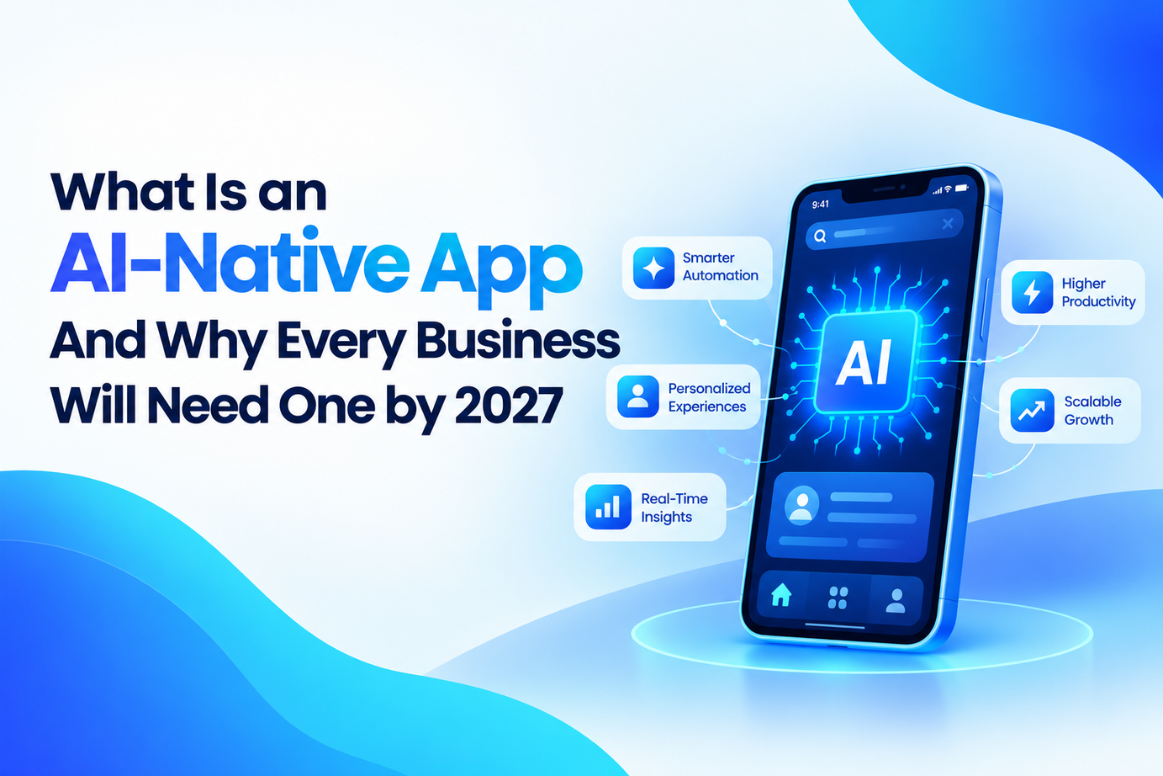
The most competitive apps are rebuilding their architectures with AI as the core layer — not a plugin. This includes AI-driven routing, dynamic feature flags, and model-as-API design patterns.
Trend 05 - Edge AI & On-Device LLMs
Compact, quantized language models running entirely on-device are eliminating cloud dependency for AI features. Expect this to become the standard for privacy-sensitive applications by 2027.
Trend 06 - Emotion-Aware UX
AI systems that detect user frustration, confusion, or urgency through behavioral signals and adapt the interface in real time are entering production in leading consumer and B2B apps alike.
What This Means for Your 2026 Product Roadmap
These trends are not future concerns — they are active differentiators today. Product managers who build AI literacy into their team's culture, invest in data infrastructure, and partner with the right development expertise will ship products that compound in value. Those who wait for the "right time" will find themselves perpetually behind the curve.
Frequently Asked Questions
How long does AI integration for a mobile app typically take?
It depends on the complexity of the AI feature and the maturity of your data infrastructure. A well-scoped pilot — for example, an AI-powered search or recommendation engine — can go from discovery to production in 8–14 weeks. More complex integrations like multi-model systems or full agentic workflows typically require 4–9 months. Engaging an experienced AI mobile development partner early significantly compresses this timeline.
Is AI integration cost-effective for startups and mid-sized businesses?
Yes — more so than ever. Cloud-based AI APIs (vision, NLP, recommendations) have democratized access to enterprise-grade AI without the cost of building models from scratch. Most startups can begin meaningful AI integration for mobile apps with a focused investment in one high-value feature, then scale from there as ROI materializes.
What's the biggest mistake product managers make with AI mobile projects?
Treating AI as a feature sprint rather than a capability investment. AI requires ongoing data curation, model monitoring, and retraining — it's a system, not a feature. Teams that don't plan for the operational side of AI end up with models that degrade in production and create negative user experiences.
How do I ensure user privacy when integrating AI into my mobile app?
Start with a privacy-by-design approach: collect only what you need, anonymize wherever possible, and use on-device inference for sensitive data processing. Ensure your development partner has deep familiarity with relevant regulations — GDPR, CCPA, India's DPDP Act — and build user consent and data transparency controls into your app's UX from the start.
What should I look for in an AI mobile app development partner?
Look for a team with proven experience across both the ML engineering and mobile platform layers (iOS/Android/cross-platform). Evaluate their approach to data governance, model monitoring, and responsible AI practices. Ask for case studies with measurable outcomes — not just impressive demo screenshots. A great partner will challenge your assumptions and push for the right solution, not just execute requirements.
Turn Your Mobile App Into an AI-Powered Growth Engine
Naxtre specializes in end-to-end AI mobile app development — from strategy and data architecture to deployment and continuous optimization. We've helped startups and enterprise teams across fintech, healthtech, retail, and SaaS build AI-powered mobile applications that users love and businesses depend on.
Let's Talk
About Your Idea!