- Home
- ServicesCrafted for Growth
Our development solutions are designed to transform your vision into a thriving success story.
- TechnologiesTech Solutions
We leverage cutting-edge technology to drive efficiency, scalability, and excellence in every project we undertake.
- Contact Us
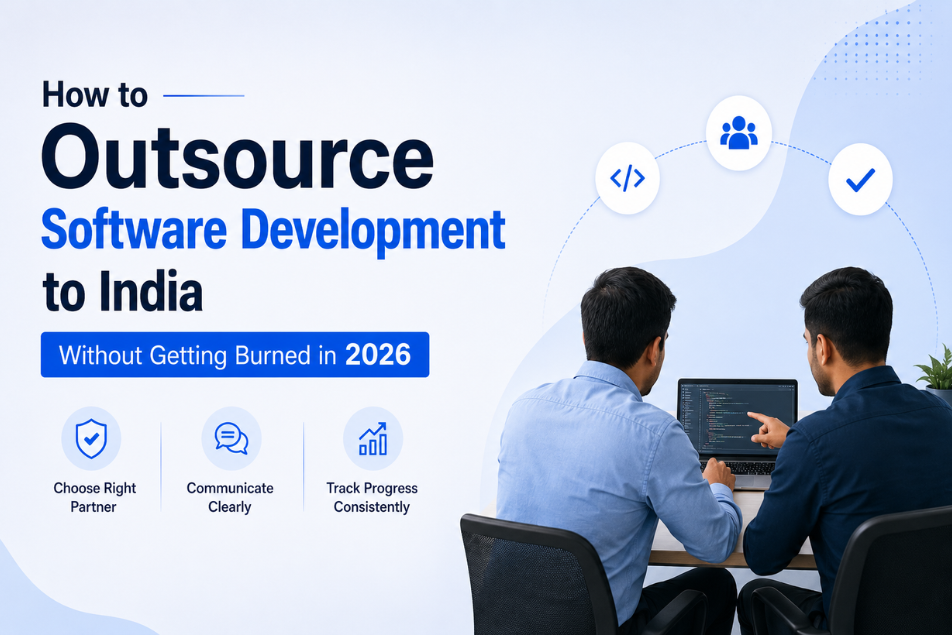
How to Outsource Software Development to India Without Getting Burned in 2026
Posted By
naxtre
Published Date
22-05-2026
To outsource software development to India without
getting burned: define your scope clearly before you talk to anyone, verify
your vendor's real project portfolio, protect your IP with a solid NDA and
contract, choose the right engagement model for your project stage, and treat
it as a partnership — not a transaction. Most outsourcing failures come from
poor setup, not poor talent.
Let's be honest —
"outsource to India" has been said so many times it's practically a
reflex. But there's a reason companies from London to Los Angeles still choose
India for software development in 2026, even with AI tools supposedly making
in-house building cheaper and faster.
India produces over 1.5
million engineering graduates every year. Its IT exports crossed $194 billion in 2023-24 (NASSCOM). Over 70% of US companies use offshore development to access specialised skills and speed up product timelines,
not just to cut costs (Deloitte). And when you look at which companies are
winning product races right now, a lot of them have India-based development
partners quietly behind the scenes.
So why do some outsourcing
relationships go terribly wrong? Because most founders and CTOs walk into them the
same way someone buys a used car — they look at the sticker price, ask a few
surface questions, and sign before they've done the real digging.
This guide fixes that. Here's
what you actually need to know before you outsource software development to
India in 2026 — and how to set yourself up so it doesn't blow up six months
in.
Key Takeaways
•
India is still the world's leading software
outsourcing destination — for talent depth, cost, and English
communication, nothing else comes close at scale.
•
60% of offshore project failures come from cultural
mismatch and unclear expectations — not from developer skill gaps.
•
The cheapest hourly rate is almost never the
cheapest project — total engagement cost is what matters.
•
IP protection is achievable — but only if your
NDA and contract are written correctly from day one.
•
The engagement model matters as much as the vendor
— fixed-price, dedicated team, and T&M each work for different project
types.
•
The best signal of a good vendor is how they
behave before you sign — not how polished their sales pitch is.
Why India Still Wins in 2026 — But Not for the Reason You Think
People still assume the main
reason companies outsource to India is cost. That was true in 2005. By 2026,
that story is more complicated — and more interesting.
Yes, you can hire a senior
full-stack developer in India for a fraction of what the same person costs in
Austin or London. But the bigger advantage now is talent depth and speed of
assembly. Finding a senior fintech engineer with specific experience in
credit bureau integration in Austin can take four months. In India, you can
have a team with that exact background assembled and onboarded in under two
weeks.
That speed is what early-stage
founders and scale-ups actually need. Not just savings — momentum.
India's real edge in 2026 isn't
the rate card. It's the combination of talent depth, English fluency, agile
familiarity, and a time-zone window that overlaps with both European and Asian
business hours.
What's changed in 2026 is the
risk profile. Issues around IP protection, developer misclassification, and
engagement model fit are now the primary concerns for CTOs and founders
evaluating Indian partners (Asanify, 2026). The talent question is largely
settled. The execution and governance question is where deals go wrong.
The Four Engagement Models — And Which One Is Right for You
One of the biggest mistakes
people make when outsourcing is picking a vendor before picking a model. The
engagement model — how you structure the relationship — determines your cost
predictability, control level, and risk exposure more than anything else.
Fixed-Price Project
You define the scope, they quote
a price, and you pay for a delivered output. Simple on paper. The problem is
that software projects almost never stay exactly as scoped — and when they
don't, you end up in painful renegotiation or receiving a product that's
technically "complete" but not what you actually needed.
This model works well for
tightly scoped MVPs, internal tools, or projects where requirements genuinely
won't change. It breaks down fast for anything complex or evolving.
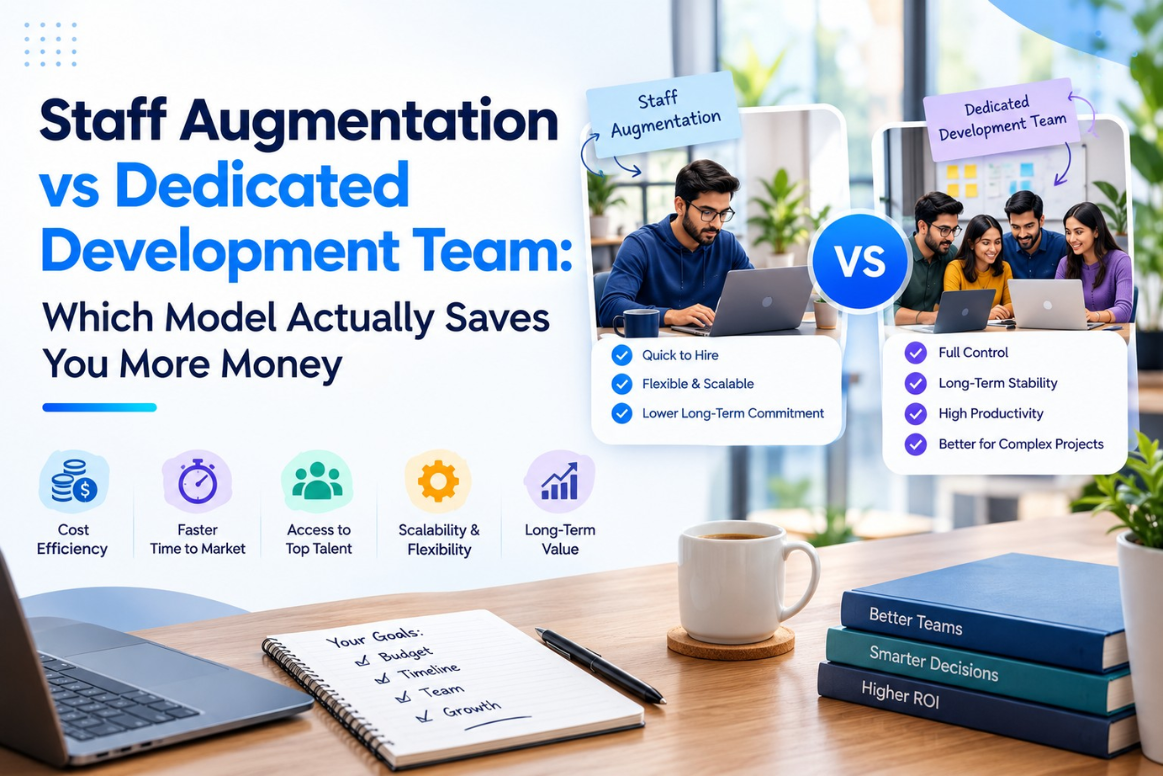
Dedicated Development Team
You hire a pre-vetted team —
developers, QA, designer, and a project manager — on a monthly retainer. They
work exclusively on your product, follow your processes, and operate as a
seamless extension of your in-house team.
This is the model that actually
scales. You get the control of an in-house team, the cost advantage of
offshore, and the flexibility to grow or shrink the team as your product
evolves. It's also the model where cultural fit matters most — because these
people are going to be in your daily standups.
Time and Material (T&M)
You pay for the hours worked.
Scope can flex, requirements can evolve, and you stay in the driver's seat
throughout. The risk is velocity — if requirements keep expanding, costs can
drift if you don't manage the process tightly.
T&M works well when you're
building something genuinely exploratory, or when you already have strong
product management and want maximum flexibility.
Staff Augmentation
You bring in specific developers
to plug gaps in your existing team — a React Native specialist, a DevOps
engineer, a QA lead — without hiring full-time. Fast to set up, easy to exit,
and highly flexible. Works best when you have strong in-house engineering
leadership who can direct and review external contributors.
The Real Reasons Outsourcing Projects Fail — And How to Avoid Them
This is the part most
outsourcing guides skip. They'll tell you to "check references" and
"review portfolios." All correct. None of it is sufficient.
Reason 1: The requirements were never actually clear
If you can't describe what
you're building in writing — feature by feature, user flow by user flow — no
development team in the world will build it correctly. Vague briefs are the
number one cause of scope creep, blown budgets, and disappointment. Before you
talk to a single vendor, write it down.
Reason 2: You optimised for hourly rate instead of total cost
An offshore team at $15/hour
with three times the communication overhead, twice the revision cycles, and
technical debt that costs $200,000 to fix post-launch is not cheaper than a
$50/hour team that delivers clean, maintainable code on schedule. Total
engagement cost — including your own time managing the relationship — is the
only number that matters.
Reason 3: Cultural mismatch was ignored
Research puts cultural mismatch
as the cause of 60% of offshore project failures. This isn't about
nationality — it's about communication style, expectation-setting, and the
willingness to surface problems before they're critical. The best Indian
development teams are direct, transparent, and will push back on a flawed
brief. The worst ones will say yes to everything and build exactly what you
asked for, even when what you asked for won't work.
Reason 4: IP wasn't protected from day one
Your NDA and development
contract need to cover code ownership, data security, non-solicitation of your
clients, and confidentiality of your product plans. This is not the place to
use a free template you found online. Have a lawyer review it. A
STPI-registered company in India — like Naxtre — operates under Indian IT law
with government oversight, which adds an additional layer of legal
accountability that unregistered shops do not have.
Reason 5: The relationship was treated as a transaction
"Here's the spec. Build
it." This approach fails because software development isn't manufacturing.
Markets shift, requirements evolve, and good engineers will spot problems with
your approach that aren't in any specification document. The companies that get
the best outcomes from outsourcing treat their Indian partners as
collaborators, not order-takers.
What to Actually Look for in an Indian Development Partner
The popular advice — check
references, look at portfolios, run a paid trial sprint — is all correct. But
here's what separates a genuinely good vendor from one who just looks good in a
sales call.
•
They push back before you've signed anything. A
vendor who agrees with everything in the discovery phase is either not
experienced enough to spot problems or not confident enough to raise them.
Neither is a good sign.
•
Their portfolio shows named clients and specific
results. Not industry logos and vague "enterprise-grade
solutions." Look for case studies that name the client, describe the
problem, explain the technical approach, and mention measurable outcomes.
•
Their senior engineers are actually involved. The
classic bait-and-switch is the CTO on the sales call and a two-year-experience
developer on the project. Ask directly: who will be doing the architecture? Who
reviews pull requests? Are those people available to speak with before you
sign?
•
They have certifications that matter. AWS
Solutions Architect, AWS DevOps Engineer, Microsoft Azure — these aren't just
badges. They signal that the company invests in keeping its engineers current
and that the team has been externally validated on the technologies your
product likely depends on.
•
They're registered and compliant. STPI
registration (Software Technology Parks of India) means the company operates
under government oversight, files proper returns, and meets the compliance
standards required for serving international clients. It's not a guarantee of
quality, but its absence is a yellow flag.
What Does It Actually Cost to Outsource to India in 2026?
Here are real numbers — not
"contact us for a quote" ranges.
Role
•
Junior developer (2–3 years): $18–$30/hour |
~$3,000–$4,500/month
•
Mid-level developer (4–6 years): $30–$50/hour |
~$5,000–$8,000/month
•
Senior developer (7+ years): $50–$80/hour |
~$8,000–$14,000/month
•
Full dedicated team (4–6 people): $12,000–$22,000/month
•
US/UK equivalent team cost: $60,000–$90,000/month
That cost gap — roughly 60–75%
lower for an Indian team — is significant. But remember the point from
earlier: the cheapest rate isn't the cheapest project. A Tier-1 city like
Bengaluru or Delhi will cost 15–20% more than a Tier-2 city like Mohali or
Pune. Specialised stacks — Golang, Rust, blockchain — command a premium that
narrows the headline discount.
The sweet spot for most founders
and scale-ups is a mid-to-senior dedicated team based in a Tier-2 city —
full experience, lower overhead, and a company culture that isn't competing on
three fronts with the Bangalore GCC ecosystem for every senior engineer they
hire.
How Naxtre Does Outsourcing Differently
We've been building software
from Mohali since 2015. In that time, we've delivered over 1,000 projects for
clients in the UK, USA, Canada, Australia, and across the Middle East. Some of
those clients are Fortune 500 companies. One was the Indian government.
Here's how we approach
outsourcing engagements:
•
No bait-and-switch. The engineers on our sales
calls are the engineers on your project. Our senior architects review every
project design before a line of code is written.
•
Scope clarity before contract. We won't sign
until we've broken your project into individual features, agreed on the
definition of done for each, and given you a realistic timeline — not an
optimistic one.
•
IP protection built in. As a STPI Punjab
registered company, we operate under Indian government oversight. Every
engagement includes a full NDA, IP assignment clause, and data security
agreement reviewed by our legal team.
•
Three AWS certifications + three Microsoft
certifications. Your cloud architecture is being designed by engineers who
have been externally validated on the platforms they're building on.
•
Transparent pricing. Fixed-price, dedicated
team, or T&M — we'll recommend the model that actually fits your project
stage, not the one that looks best on a proposal.
We're not the right partner for
every project. We take a limited number of engagements each year specifically
so we don't overextend on delivery quality. But if you're evaluating
outsourcing to India seriously, the conversation is worth having.
The Bottom Line
Outsourcing software development
to India in 2026 works. It works for seed-stage startups who need to move fast
without burning runway. It works for scale-ups who need to double their
engineering capacity in four weeks. It works for enterprises who need
specialised skills that are genuinely hard to hire locally.
What doesn't work is going in
unprepared. Vague requirements, choosing on price alone, skipping the IP
paperwork, and treating engineers like order-takers — these are the things that
turn a smart strategic decision into a six-figure mistake.
Do the diligence. Pick the right
model. Treat it like a real partnership.
If you want to talk through
whether Naxtre is the right fit for your project, the first call is free
and there's no sales pitch — just an honest conversation about what you're
building and whether we can help.
Book your call at www.naxtre.com
――――――――――――――――――――――――――――――――――――――――――――――――――――――――――――
Frequently Asked Questions
Is outsourcing software development to India still worth it in 2026?
Yes — for most companies,
absolutely. India produces 1.5 million engineering graduates a year, its IT
sector exports crossed $194 billion in 2023-24, and over 70% of US companies
use offshore development teams according to Deloitte. The value proposition has
shifted from pure cost savings to talent access, speed of assembly, and
delivery scale. A good Indian development partner gets you a senior full-stack
team on your project in two weeks — something that takes four months of
recruiting in most US or UK cities. The risk is real but manageable with the
right setup: clear scope, solid contracts, and treating the relationship as a
genuine partnership.
How do I protect my IP when outsourcing to India?
Start with a proper NDA before
any conversation about your product details. Your development contract should
include an IP assignment clause that explicitly transfers all code ownership to
you, a data security agreement that specifies how your data is stored and accessed,
and a non-solicitation clause covering your clients and employees. Using a
STPI-registered company adds a layer of government oversight and compliance
accountability. Don't use a free template — have a lawyer review the contract,
or at minimum have your vendor explain every clause before you sign. Most
outsourcing IP disasters happen because founders skip the paperwork to move
faster.
What is the average cost to hire a development team in India in 2026?
A mid-to-senior dedicated development team of four to six people in India typically costs $12,000–$22,000
per month in 2026. Individual developers range from $18–$30/hour for junior
level to $50–$80/hour for senior engineers with seven-plus years of experience.
Tier-1 cities like Bengaluru and Delhi command 15–20% premiums over Tier-2
cities. Specialised stacks like Golang, Rust, or blockchain can narrow the cost
advantage significantly. For comparison, an equivalent team in the UK or US
typically runs $60,000–$90,000+ per month in total employer cost.
What engagement model should I choose for my software project?
It depends on your project stage and how well-defined your requirements are. Fixed-price works for tightly scoped, short-duration projects where requirements won't change. A dedicated development team works best for ongoing product development where you want control, flexibility, and a team that grows with your product. Time-and-material is suited to exploratory or evolving projects where you have strong in-house product management. Staff augmentation is ideal when you need specific skills to fill gaps in an existing engineering team. Most companies at the MVP-to-growth stage do best with a dedicated team — it gives you the control of in-house without the hiring overhead. [software development outsourcing services]
How long does it take to set up an outsourced development team in India?
With a reputable partner, a
dedicated development team can typically be assembled, briefed, and onboarded
within one to two weeks. This assumes your requirements are documented and
you're available for a proper discovery call. Compare that to the typical
four-month hiring timeline for a senior developer in a competitive US or UK
market. Speed of assembly is one of the most undervalued advantages of
outsourcing to India — particularly for companies with a market window they
need to hit.
What are the biggest red flags when evaluating an Indian development
company?
Watch out for: a company that
agrees with everything in the discovery call without asking hard questions; a
portfolio full of vague "enterprise-grade solutions" with no named
clients or specific outcomes; a sales process led by senior engineers who won't
be on your project; an unusually low hourly rate that makes the economics seem
too good; no STPI registration or equivalent compliance credentials; and no
clear process for scope change management. The vendor's behaviour before money
changes hands is the most accurate signal of how they'll behave when things get
difficult mid-project.
Can I outsource just part of my project to India?
Yes — and for many companies,
this is the smartest starting point. Staff augmentation lets you bring in
specific skills (a React Native developer, a DevOps engineer, a QA lead)
without committing to a full-team model. This gives you a low-risk way to test
the relationship, evaluate the quality of work, and build trust before
expanding the engagement. If it works well — and with the right partner it
usually does — you can scale up. If it doesn't, you haven't bet the whole
project on a vendor you barely know.
Let's Talk
About Your Idea!